10th Class English Important Questions – CCE Pattern in AP and Telangana

Following are important questions and answers from the lesson Attitude is Altitude. These are useful for the public exams of SSC Board of Andhra Pradesh and Telangana states as both are following CCE pattern.

Reading: Attitude Is Altitude
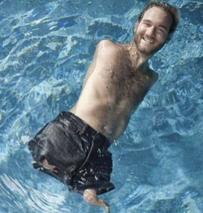
10th English Lession Nick

1. ‘I call it my chicken drumstick,’ joked Nick. What does ‘it’
refer to? How does it help him?

A: ‘It’ refers to the small foot on Nick’s left hip. It looks like a chicken drumstick. It helps him balance, swim and move from one place to another place. It enables him to kick. It helps him in typing, writing and picking things up between his toes.

2. ‘His parents decided not to send him to a special school.’ Was Nick happy about his parents’ decision? Why or why not? What do you think about this decision?

A: Nick was not happy about his parents’ decision. He was terrified because there might be the risk of bullying in a mainstream school. I think that as a result of being a companion to able persons, he would have the chance of becoming independent by competing with them.

3. How did Nick’s parents help him to become independent?
A: (a) Nick’s father encouraged Nick to get into football, swimming, typing and skating.
(b) Nick’s mother invented a special plastic device that meant Nick could hold a pen and pencil.
(c) Despite the risk of bullying, Nick’s parents joined him mainstream school.

4. Pick out the symptoms of Nick’s depression. Do you think his depression was normal or something unique about him? Give reasons for your opinion.

A: At the age of eight, Nick went to his mother crying and told her that he wanted to kill himself. He was terrified about his future. At age ten, Nick tried to drown himself in the bath, as he could not control his depression. Any person born like Nick might have the feelings of deep depression. I think his depression was normal.

5. Which incident is funny in ‘Attitude Is Altitude’? What makes it funny?

A: One day Nick was in a car at traffic lights. A girl was looking at him interestingly. She could only see Nick’s head so he decided to do a 360 degree spin in the car seat to show her that he was a torso. When she saw Nick’s body without arms and legs, she was shocked and left the place quickly. The idea of Nick showing the girl his torso, by making a 360 degree spin, makes the scene funny.

6. What made Nick choose Bethany Hamilton to learn surfing?

A: Nick thought that Bethany Hamilton could help him best in learning surfing Because Bethany Hamilton was good at surfing because she was gotten her arm bitten off by a shark when she was 12. Though she had no arm, she was able to surf well. As a disabled person, she could learn Nick well how to surf without arms and legs.

7. What do you learn from the life of Nick Vujicic ?

A: It is learnt from the life of Nick Vujicic that inner personality is more important than the physical personality. The life story of Nick teaches us that if we fail, we should try again and again until we succeed.

8. ‘I tell people to keep on getting up when they fall and to always love themselves.’ How is this statement substantiated by Nick?

A: As a disabled man, Nick failed to do things successfully like other able people. Whenever Nick fails, he tries again and again until he succeeds. When Nick was learning how to surf, he was terrified at first but later he did very well.

9. How did Nick and Kanae become close friends?

A: Kanae Miyahara attended to a meeting in 2008 where Nick was the guest speaker in Texas. At that time she was attracted to Nick’s message. From that time they were in touch with each other to share their ideas on giving hope to the needy and they became close friends.

SSC Social Studies Important Questions with Answers: Read More

SSC Biology Important Questions: Read More

Tenth Class English Important Questions and Answers

10th Class English Practice Questions (2 Marks Questions)

Q: What did Bahuguna suggest to increase forest productivity?
A: Bahuguna suggested that the villagers must replant what they cut. They should grow fuel, fodder, fruit and nut bearing trees. They
should seek the help of the forestry department.

Q: What does Bahuguna think are the three ways in which villagers can fight poverty and deforestation?
A: Bahuguna thinks that the change of land ownership, change in the eating habits replacing cooked food with soaked food and to increase forest productivity are the three ways in which villagers can fight poverty and deforestation.

Q: Why have women led the fight against deforestation?
A: Women have led the fight against deforestation because they spend a large part of each day in the forest looking for fuel and fodder.

Q: Several funny things happen to Jim. Which of them do you think is the funniest? Why do you think so?
A: An antennae grows out of Jimmy Jet’s hair. I think it is the funniest because a tall antennae rising out of one’s hair looks awkward.

Q: What lesson does the story of Jimmy Jet teach us?
A: The story of Jimmy Jet teaches us that we should not become a slave to television. Too much of anything is nonsense.

Q: Did the narrator really wish to withdraw all the money he had deposited in the bank? Then, why did he do so?
A: The narrator did not wish to withdraw all the money he had deposited in the bank. Out of confusion he wrote fifty-six dollars instead of six dollars on the cheque.

Q: Why did the narrator try to look like a man with a quick temper?
A: Out of confusion, the narrator committed a mistake in putting the figure on the cheque. In order to make others feel that he was
insulted by someone in the bank, he tried to look like a man with a quick temper.

Q: What kind of person was the narrator of ‘My Financial Career’?
A: The narrator was a timid, diffident and nervous man. He would sometimes behave like an idiot. To cover his mistakes, he tried to look like a man with a quick temper.

Reading Comprehension (1 Mark)
I. “Soil, water and pure air,” they replied. (Chipko)
a) What does ‘they’ refer to?
Ans: ………………………………….
b) To which question did they reply?
Ans: ………………………………….
c) What are soil, water and pure air?
Ans: ………………………………….
II. “We are safe from interruption here”, he said.
(My Financial Career)
a) Who are the two persons mentioned here?
Ans: ………………………………….
b) Who is the speaker?
Ans: ………………………………….
c) What does ‘here’ refer to?
Ans: ………….

Grammar And Vocabulary
III. Putting the words under correct headings.(2 Marks)
A. 1. rhinoceros 2. hippopotamus 3. ostrich 4. flamingo 5. yalk 6. reindeer 7. sparrow 8. peacock
Animals Birds
1. 1.
2. 2.
3. 3.
4. 4.
B. 1. planetarium 2. museum 3. mason 4. plumber 5. auditorium 6. politician 7. stadium 8. chef
Persons Places
1. 1.
2. 2.
3. 3.
4. 4.

IV. Using opposite words (1/2 Mark Q’s)
1. There is nothing special about me. I’m just an …. man.
2. You will miss a lot if you are …, so be regular to classes.
3. The army enforces strict discipline; any ……… is punished severely.
4. Everything is possible for man. Nothing is ……………… to him.
5. The state Director General of Police has ordered the police to arrest the dacoit …. or alive.
6. Sai Chandana does not like to be dependent. She wants to be ……..

V. Language Functions: The use of Polite Forms (1/2 Mark Q’s)
What do the following sentences mean? Tick your answer.
1. Can I see the manager?
a) seeking help ( )
b) seeking permission ( )
c) making an offer ( )
d) making a request ( )

2. Shall I go with you?
a) asking a question ( )
b) seeking information ( )
c) seeking help ( ) d) offering help ( )

3. How careless of you to drop the flower vase?
a) complaining ( ) b) criticising ( )
c) scolding ( ) d) warning ( )

Answers: I. a) Two seventh class girls. b) what do forests bear? c) The basis of life.

II. a) The bank manager and the narrator b) The bank manager c) A private room.

III. A. Animals: 1. rhinoceros 2. hippopotamus 3. yalk 4. reindeer Birds: 1. ostrich 2. flamingo 3. sparrow 4. peacock
B. Persons: 1. mason 2. plumber 3. politician 4. chef. Places: 1. planetarium 2. museum 3. auditorium 4. stadium

IV. 1. ordinary 2. irregular 3. indiscipline 4. impossible 5. dead 6. independent
V. 1-b; 2-d; 3-c.

error: Content is protected !!